

A structural failure rarely starts as a failure. It starts as a corrosion spot a few millimeters deeper than normal, a microscopic crack in a weld, a slightly shifted support - small signs that, without an inspection program, only show up once they have already become an expensive or dangerous problem. Structural integrity isn\'t a one-off inspection: it is a continuous process of measuring, recording, and comparing.
After more than a decade inspecting and restoring the integrity of offshore, naval, and port structures, we put together this guide on how a well-run inspection program identifies failures before they force an unplanned stoppage.
WHAT A STRUCTURAL INTEGRITY PROGRAM IS
A structural integrity program is the set of inspections, tests, and records that track a structure\'s real condition over time - not just "is it good or bad right now," but "how is it changing." Corrosion progresses, fatigue accumulates load cycles, a weld can develop a crack that grows little by little.
Without a comparable history between inspections, every survey is an isolated snapshot. With one, it becomes possible to calculate a corrosion rate, project when a component will reach its acceptable limit, and plan the intervention in advance - instead of reacting after the limit has already been crossed.
6 ELEMENTS OF AN INSPECTION PROGRAM THAT WORKS
In practice, programs that genuinely catch failures before they become a problem combine the following elements:
Qualified Visual Inspection
The first line of detection - a trained inspector catches signs a generic walk-through misses.
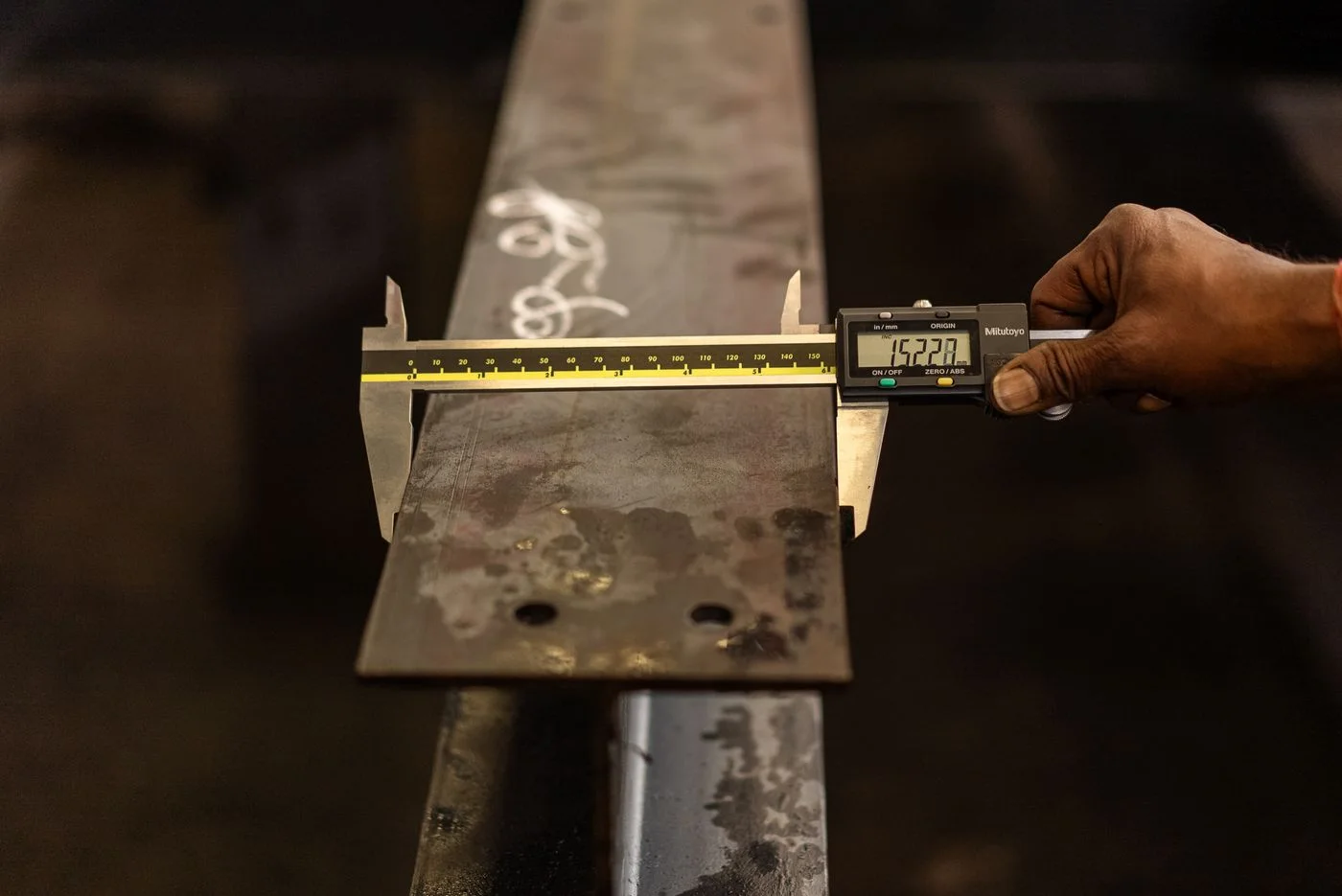
Thickness Measurement
Ultrasonic thickness gauging at fixed, repeatable points, to measure material loss from corrosion over time.
Non-Destructive Testing
Dye penetrant, magnetic particle, and ultrasonic testing to detect surface and internal cracks without damaging the part.
Comparable History
Every measurement point identified and logged, making it possible to calculate the degradation rate between inspections.
Clear Acceptance Criteria
Limits defined before the inspection - what is acceptable, what requires monitoring, and what requires immediate action.
Traceable Technical Report
Photo records, exact location, and the result of every test, documented so any engineer can review it later.
THE SIGNS AN INSPECTION PROGRAM LOOKS FOR
- General or pitting corrosion - uniform or localized material loss, common in marine environments
- Fatigue cracks - formed by repeated load cycles, usually starting at stress concentrators such as welds and holes
- Deformation or displacement - a support, beam, or foundation that has shifted from its original position
- Coating failure - degraded paint or anti-corrosion protection, which accelerates corrosion of the substrate underneath
- Loose connections - bolts, rivets, or joints that have lost their original torque from vibration and use
HOW OFTEN TO INSPECT
There is no single interval - it depends on the type of structure, the exposure environment, and the degradation history already on record. Offshore and port structures exposed to salt spray tend to require shorter intervals than protected indoor structures. A mature program adjusts frequency based on its own data: if the measured corrosion rate is faster than expected, the interval shrinks; if it is stable and within projections, it can stay the same or stretch out.
COMMON MISTAKES IN STRUCTURAL INTEGRITY PROGRAMS
- Inspecting without fixed reference points - without always measuring at the exact same spot, you can\'t compare one inspection to the last
- Treating each inspection as isolated - without history, you lose the degradation rate, which is the most valuable piece of information
- Delaying action once the limit is reached - an acceptance criterion only works if the corrective action actually happens when it is crossed
- Inspecting only for regulatory compliance - meeting the code is not the same as having a program that genuinely anticipates failures
- No responsible engineer reviewing the results - inspection data without technical analysis never turns into a maintenance decision
STRUCTURAL INTEGRITY AND MAINTENANCE WITHOUT STOPPING OPERATIONS
A well-structured integrity program is the foundation of predictive monitoring - it is what makes it possible to schedule maintenance in a convenient window instead of being caught off guard by a failure that forces an emergency stoppage. We detail how this applies to terminals and platforms in continuous operation in the zero-downtime guide below.
CONCLUSION
Structural integrity isn\'t about reacting to a failure - it is about having enough data to predict when one will happen and act before it does. Fixed measurement points, proper testing, clear acceptance criteria, and a history that is actually analyzed are what turn a routine inspection into a real prevention tool.
Frequently Asked Questions
It is the set of inspections, tests, and records that track a structure's condition over time, making it possible to calculate the degradation rate (corrosion, fatigue) and predict when a component will reach its acceptable limit, instead of only noting its current state.
Visual inspection is the first line of detection, performed by a trained inspector. Non-destructive testing (dye penetrant, magnetic particle, ultrasonic) complements visual inspection by detecting surface and internal defects that aren't visible to the naked eye.
There is no single interval - it depends on the type of structure, the exposure environment, and the degradation history already on record. Offshore and port structures exposed to salt spray usually require shorter intervals, and a mature program adjusts frequency based on its own measurement data.
Because they allow one inspection to be compared to the previous one at the exact same spot, calculating the real degradation rate. Without fixed points, every inspection becomes an isolated snapshot, with no reliable way to know whether the condition is worsening and how fast.
Yes - it is the foundation of predictive monitoring. By identifying and tracking signs of degradation before they reach a critical level, it becomes possible to schedule maintenance in a convenient window instead of being caught off guard by an emergency failure.