

Corrosion is one of the most silent - and most expensive - enemies of any metal structure exposed to an offshore, naval, or port environment. Salt spray, constant humidity, thermal variation, and direct contact with seawater accelerate steel oxidation far beyond what happens in ordinary industrial settings, compromising structural integrity and shortening the service life of platforms, hulls, and equipment.
After more than a decade performing abrasive blasting and industrial painting on offshore platforms, naval hulls, and port structures, we put together this guide with what actually separates a corrosion protection system that lasts decades from a paint job that starts failing within months.
WHAT IS ABRASIVE BLASTING AND WHY IT DEFINES PAINT DURABILITY
Abrasive blasting is the process of propelling particles (steel grit, aluminum oxide, or specialty sand) at high pressure against a metal surface to remove rust, mill scale, old paint, and any contaminant that would prevent the new coating from bonding properly.
No matter how advanced the paint system chosen, it can only perform the way it was designed to if the surface is properly prepared. Applying high-performance paint over a poorly blasted surface wastes expensive material on protection that will fail prematurely - usually showing up as blistering, peeling, or pitting corrosion just months after application.
SURFACE PREPARATION GRADES (THE SA STANDARD)
The international standard most commonly used to specify blasting cleanliness is the Swedish SIS 05 5900 (equivalent to ISO 8501-1), which defines grades from Sa 1 (light blast cleaning) to Sa 3 (blast cleaning to near-white metal). Offshore and naval structures, subject to a highly corrosive environment, typically require at least Sa 2½ (near-white metal, with no visible traces of oil, grease, dirt, or oxides) - the grade most high-performance paint systems specify as a warranty prerequisite.
Specifying the wrong grade - or accepting a blast below spec to save time - is one of the most common causes of premature paint failure in a marine environment.
6 PILLARS OF A CORROSION PROTECTION SYSTEM THAT LASTS
In practice, blasting and painting projects that genuinely protect long-term share the same technical fundamentals:
Surface Preparation (Sa 2½ Grade)
Blasting to the specified grade, removing 100% of rust and contaminants before any coating is applied.
Multi-Layer Paint System
Zinc-rich epoxy primer, intermediate coat, and polyurethane topcoat - each layer serving a specific protective function.
Dry Film Thickness (DFT) Control
Measuring dry film thickness on every coat with a calibrated gauge - too thin doesn't protect, too thick cracks and delaminates.
Controlled Climate Conditions
Relative humidity, substrate temperature, and dew point monitored throughout - painting outside the ideal window compromises cure and adhesion.
Inspection and Certification
Certified inspectors (NACE/FROSIO) validate every stage - blasting, DFT, adhesion - with photo records and a technical report.
Safety and Environment
Containment of abrasive media and waste, proper ventilation, and certified PPE protect the crew and prevent contamination of the surrounding area.
DRY BLASTING VS. WATER JETTING: WHICH TO CHOOSE
Dry blasting (with steel grit) is the most common method for surface preparation before painting, since it generates the ideal roughness profile for paint anchoring. Water jetting (ultra-high-pressure water, with or without abrasive) is used when dust generation must be limited - operations near sensitive areas, or removing residual salt from hulls that operated in seawater, since chloride residue trapped under paint is one of the most common causes of premature corrosion even when the coating looks intact.
The right choice depends on the environment, the substrate, and the specified paint system - which is why a proper technical assessment upfront is always the difference between a result that lasts and an expensive rework.
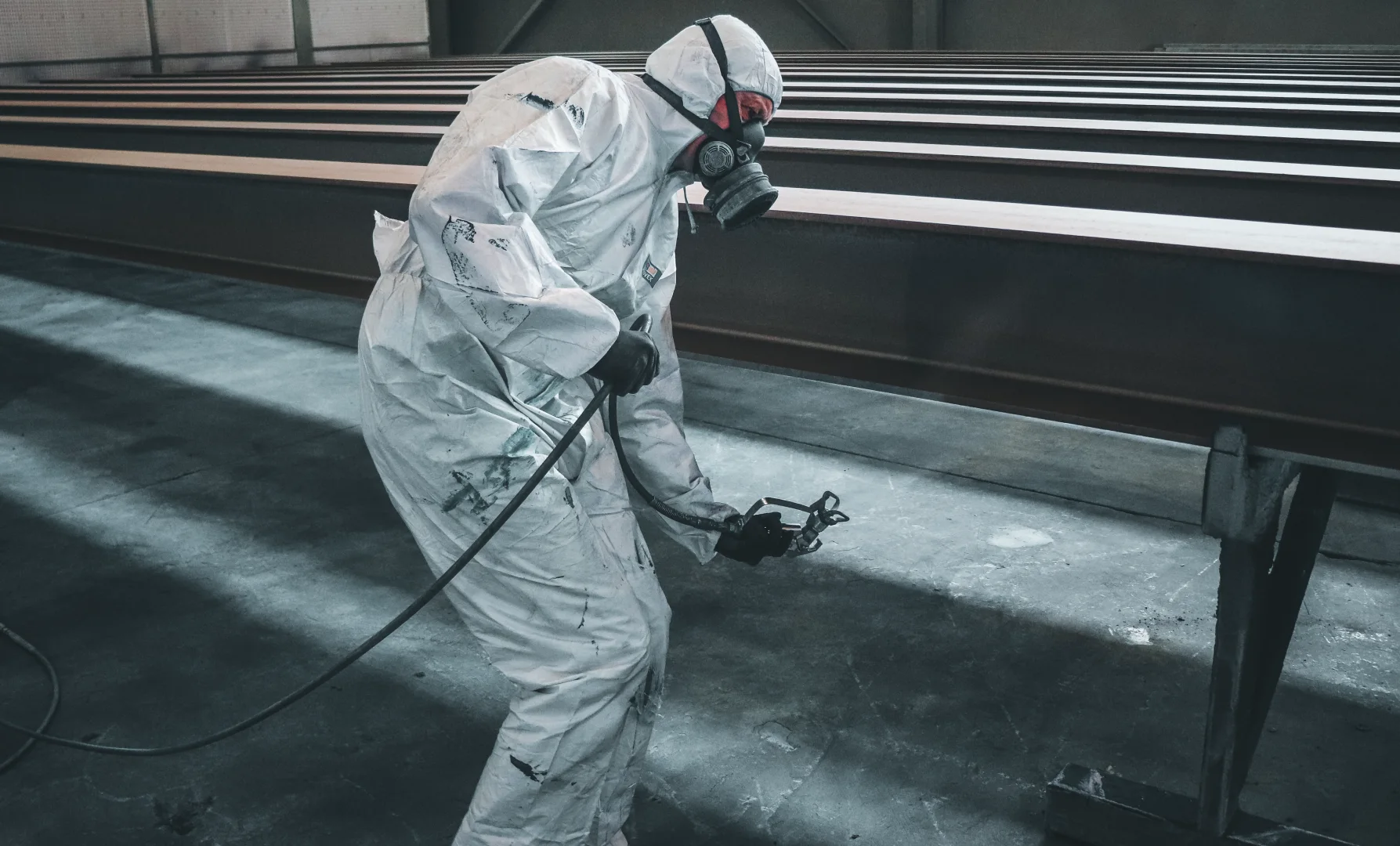
COMMON MISTAKES THAT COMPROMISE PAINT DURABILITY
- Skipping the anchor profile check - blasting to "visually clean" without measuring the anchor profile compromises adhesion even at the correct cleanliness grade
- Applying outside the climate window - painting when relative humidity or dew point falls outside the paint manufacturer's specification
- Wrong recoat interval - applying the next coat too early or too late compromises adhesion between layers
- Ignoring residual salt - in a marine environment, not washing the surface after blasting leaves chlorides that accelerate corrosion under the paint
- Cutting corners on PPE and ventilation - exposure to blasting dust and solvents without proper protection is a real risk to crew health
A REAL EXAMPLE: CORROSION PROTECTION IN THE POSH ARCADIA SHUTDOWN
Surface treatment and industrial painting are rarely the highlight of a project - but they're an essential part of the scope in practically every shutdown we execute. In the complete shutdown of the POSH Arcadia platform at the Angra dos Reis Port Terminal, blasting and painting of structures exposed to salt spray were part of the maintenance package our team delivered on schedule. We cover the full behind-the-scenes of that project in the case study below.
CONCLUSION
Sandblasting and industrial painting aren't cosmetic steps - they're the line of defense that determines whether an offshore, naval, or port structure lasts for decades or requires costly structural repairs far ahead of schedule. Surface preparation to the correct grade, a properly specified paint system, and rigorous inspection at every stage are what separate real corrosion protection from rework waiting to happen.
Frequently Asked Questions
Most high-performance paint systems for offshore and naval environments specify at least Sa 2½ (near-white metal, with no visible traces of oil, grease, dirt, or oxides) under SIS 05 5900 / ISO 8501-1. Blasting below that grade compromises adhesion and the paint system warranty.
Dry blasting uses steel grit or another abrasive propelled by compressed air, generating the ideal roughness profile for paint anchoring. Water jetting uses ultra-high-pressure water, with or without abrasive, and is used when dust generation must be limited or when residual salt needs to be removed from surfaces that operated in seawater.
It depends on the specified system, the exposure environment, and ongoing preventive maintenance, but a complete system (zinc-rich epoxy primer + intermediate coat + polyurethane topcoat) applied over a correctly prepared surface is designed to protect for many years in an offshore environment, well beyond a simple coating applied without proper preparation.
No. Every paint has an application window specified by the manufacturer - ranges for relative humidity, substrate temperature, and distance from the dew point. Painting outside that window compromises paint cure and adhesion between coats, even if the surface was properly prepared.
Residual chlorides trapped under the paint layer remain chemically active even without direct contact with air, accelerating corrosion under the coating invisibly until the failure shows up on the surface. That is why, in a marine environment, washing or water jetting to remove salt is a critical step before painting.