

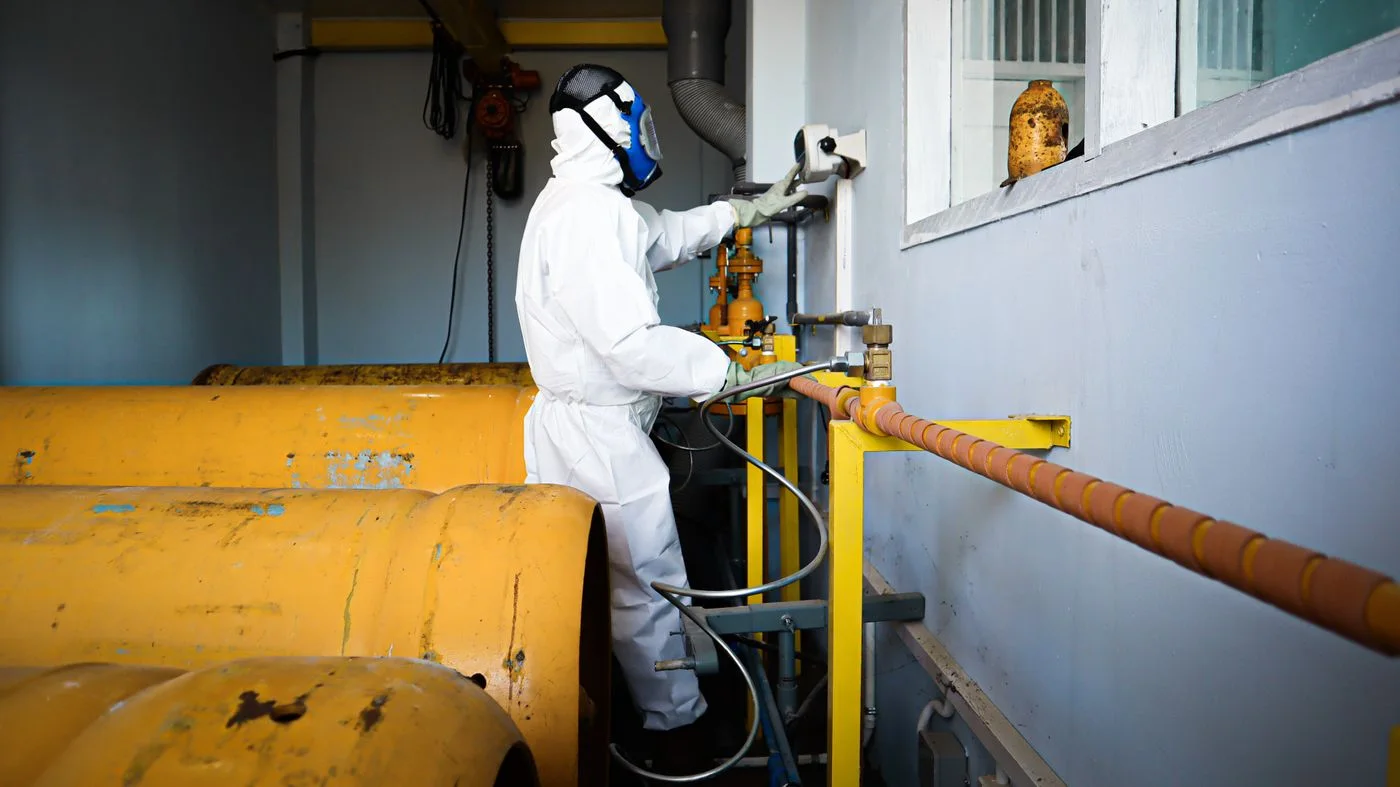
Tanks, pressure vessels, ship holds, ducts, and silos have something in common: limited entry and exit, poor natural ventilation, and a design that was never meant for continuous human occupation. In offshore, naval, and port operations, entering these spaces for inspection, cleaning, or repair is routine - and also one of the activities with the highest potential for a serious accident when done without the right procedure.
NR-33 is the Brazilian regulatory standard governing confined space work. After more than a decade performing services inside tanks, vessels, and confined structures in offshore and industrial environments, we put together this guide on what actually guarantees a safe entry - and what usually goes wrong when the procedure is treated as paperwork.
WHAT COUNTS AS A CONFINED SPACE
Under the standard, a confined space is any area or environment not designed for continuous human occupation, with limited means of entry and exit, whose existing ventilation is insufficient to remove contaminants, or that can contain or produce a hazardous atmosphere. This includes tanks, holds, ducts, pits, silos, and pressure vessels - even when, at first glance, the space looks "clean" or harmless.
The central risk isn\'t only the physical structure of the space - it is the atmosphere inside it. Oxygen deficiency, toxic gases, and flammable atmospheres can form with no visible sign, and many fatal confined-space accidents involve exactly someone who tried to rescue a coworker without using their own respiratory protection.
6 ELEMENTS OF A SAFE CONFINED SPACE ENTRY
Entries that happen without incident, repeatedly, follow the same fundamentals:
Entry and Work Permit
A formal document authorizing entry, with identified risks, control measures, and limited validity for that specific operation.
Continuous Atmosphere Monitoring
Measuring oxygen, flammable, and toxic gases before entry and throughout the entire time inside the space, not just once at the start.
Forced Ventilation
Mechanical ventilation keeping the atmosphere safe throughout the activity, especially for work that generates fumes or vapors (welding, painting).
Permanent Attendant
A trained professional outside, in constant communication with whoever is inside, never leaving the post during the operation.
Space-Specific Rescue Plan
A procedure and trained team for rescue from that particular space - never improvising an unprotected entry to help someone.
Specific Team Training
Formal NR-33 training for authorized workers, attendants, and entry supervisors, with periodic refresher courses.
WHO IS RESPONSIBLE FOR AN ENTRY UNDER NR-33
The standard defines specific roles that shouldn\'t overlap without criteria: the authorized worker, who performs the activity inside the space; the attendant, who monitors from outside and never leaves the post; and the entry supervisor, responsible for authorizing the permit, ensuring control measures are in place, and stopping the activity if conditions change. Each role has its own training and responsibilities - treating the attendant role as just another assignment, without specific training, is one of the most common mistakes.
COMMON MISTAKES THAT CAUSE CONFINED SPACE ACCIDENTS
- Trusting the space\'s appearance alone - a "visibly clean" tank can have a hazardous atmosphere that isn\'t detectable without measurement
- Measuring the atmosphere only once - conditions can change during the activity, especially in work that generates gases (welding, painting, chemical cleaning)
- The attendant leaving the post - even briefly, pulling the attendant away from continuous observation cancels the system\'s main protection
- Attempting rescue without respiratory protection - the most common cause of multiple victims in a single incident
- A generic permit, not specific to that space and that activity - the risks of a fuel tank differ from those of a ballast hold
CONFINED SPACE IN PRESSURE VESSELS AND FABRICATED TANKS
Internal inspection, repair, and maintenance of pressure vessels and tanks - a common part of boilermaking and industrial fabrication scope - almost always involves confined space entry. We detail the specific fabrication and quality considerations for this equipment in the boilermaking guide below.
CONCLUSION
Confined space safety isn\'t about having a signed checklist - it is about actually monitoring the atmosphere, keeping an attendant who never leaves the post, and having a space-specific rescue plan before any entry happens. NR-33 exists because this is one of the few industrial risks where a mistake rarely gets a second chance - which is why the procedure can never be treated as paperwork to get through quickly.
Frequently Asked Questions
Any area not designed for continuous human occupation, with limited means of entry and exit, with ventilation insufficient to remove contaminants, or that can contain/produce a hazardous atmosphere - such as tanks, holds, ducts, pits, silos, and pressure vessels.
Only authorized workers with formal NR-33 training, under a valid Entry and Work Permit for that specific space and activity, with atmosphere monitoring and a permanent attendant positioned before entry.
Because they are the main line of response in an emergency - if they leave the post, no one is monitoring whoever is inside or ready to trigger a rescue, canceling the protection the system was designed to provide.
Because the same hazardous atmosphere that affected the first person immediately affects anyone who enters unprotected - this is the most common cause of multiple-victim confined space accidents. Rescue must follow the specific plan prepared before entry.
Yes. Oxygen deficiency and toxic or flammable gases have no visible sign - which is why instrumented atmosphere measurement, before and throughout the time inside the space, is mandatory regardless of how the space looks.